ASSESS
Evidence, not opinion
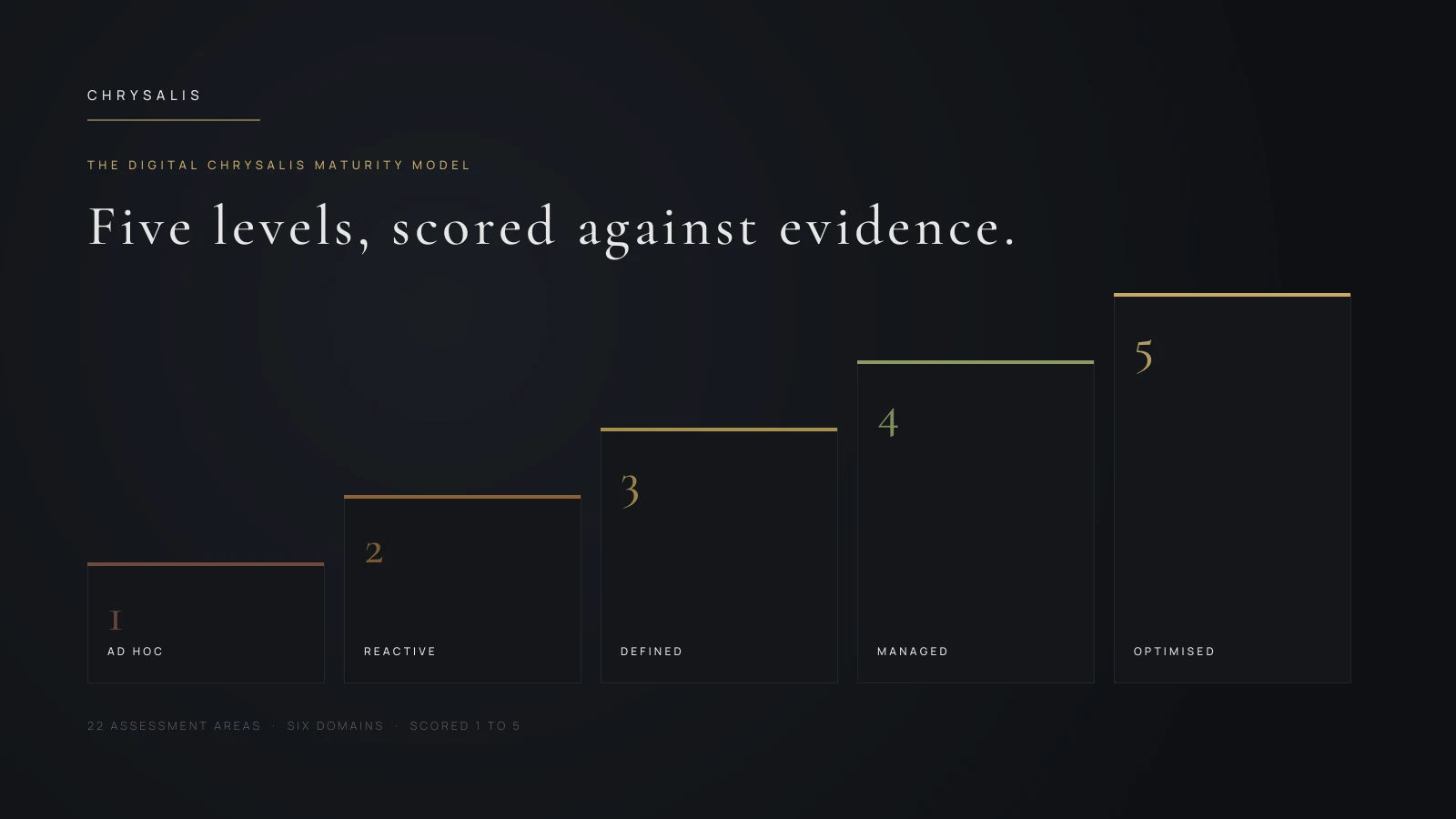
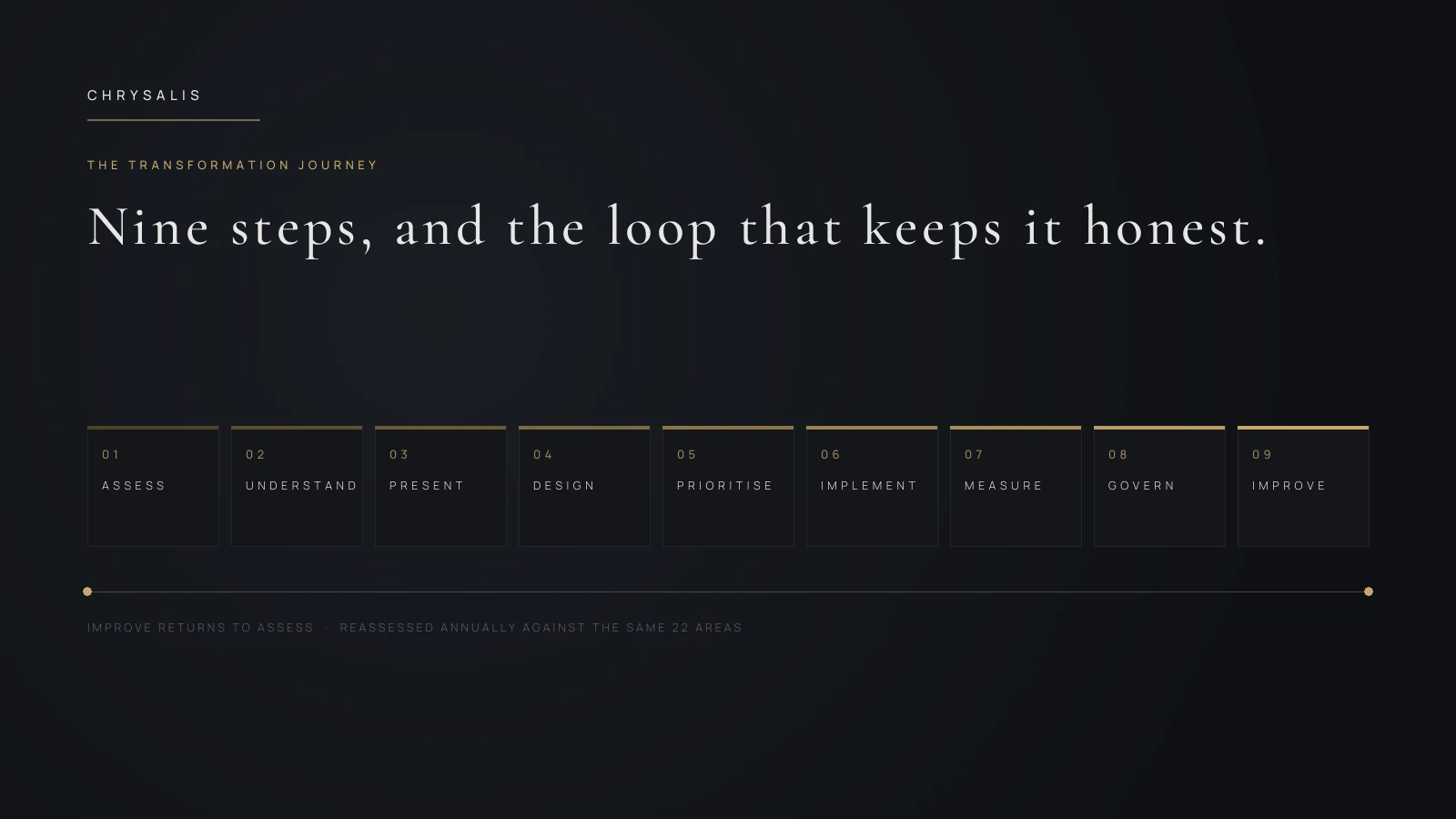
Twenty-two areas of IT service management, scored one to five against what you can actually show. The scores produce the gaps, the gaps produce the priorities and the priorities produce the plan, so the roadmap is derived rather than argued.
PLAN
A case leadership will approve
The business case framework turns assessment findings into business consequences, benefits, cost and effort. It includes the one-page executive summary and the presentation, so the ask is made in the language the board already uses.
DESIGN
An operating model that fits
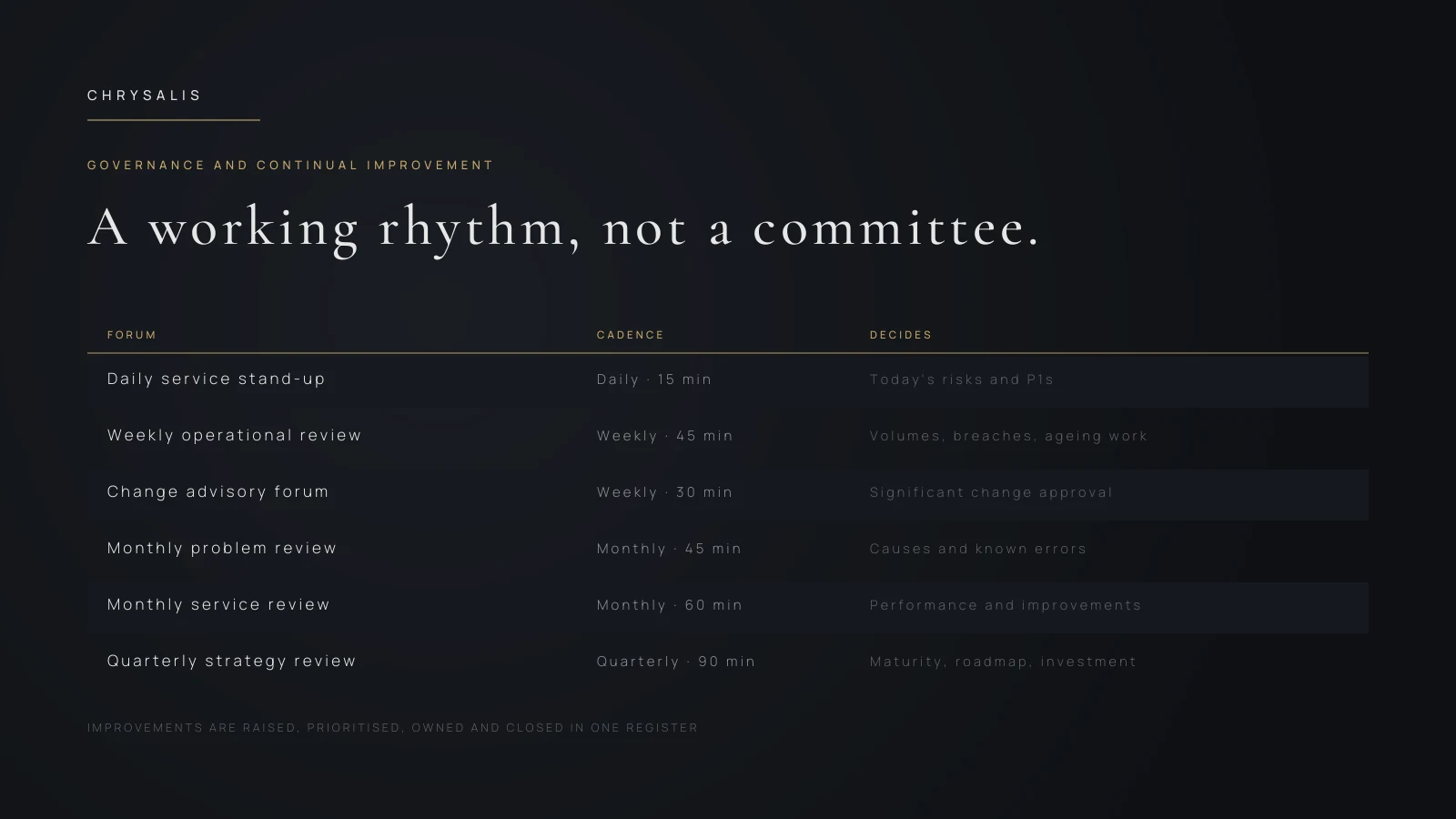
Named service and practice owners, decision rights, escalation and a governance rhythm sized for a small team. Roles are described as hats rather than headcount, so nothing here requires you to hire before you can start.
IMPLEMENT
Priority practice frameworks
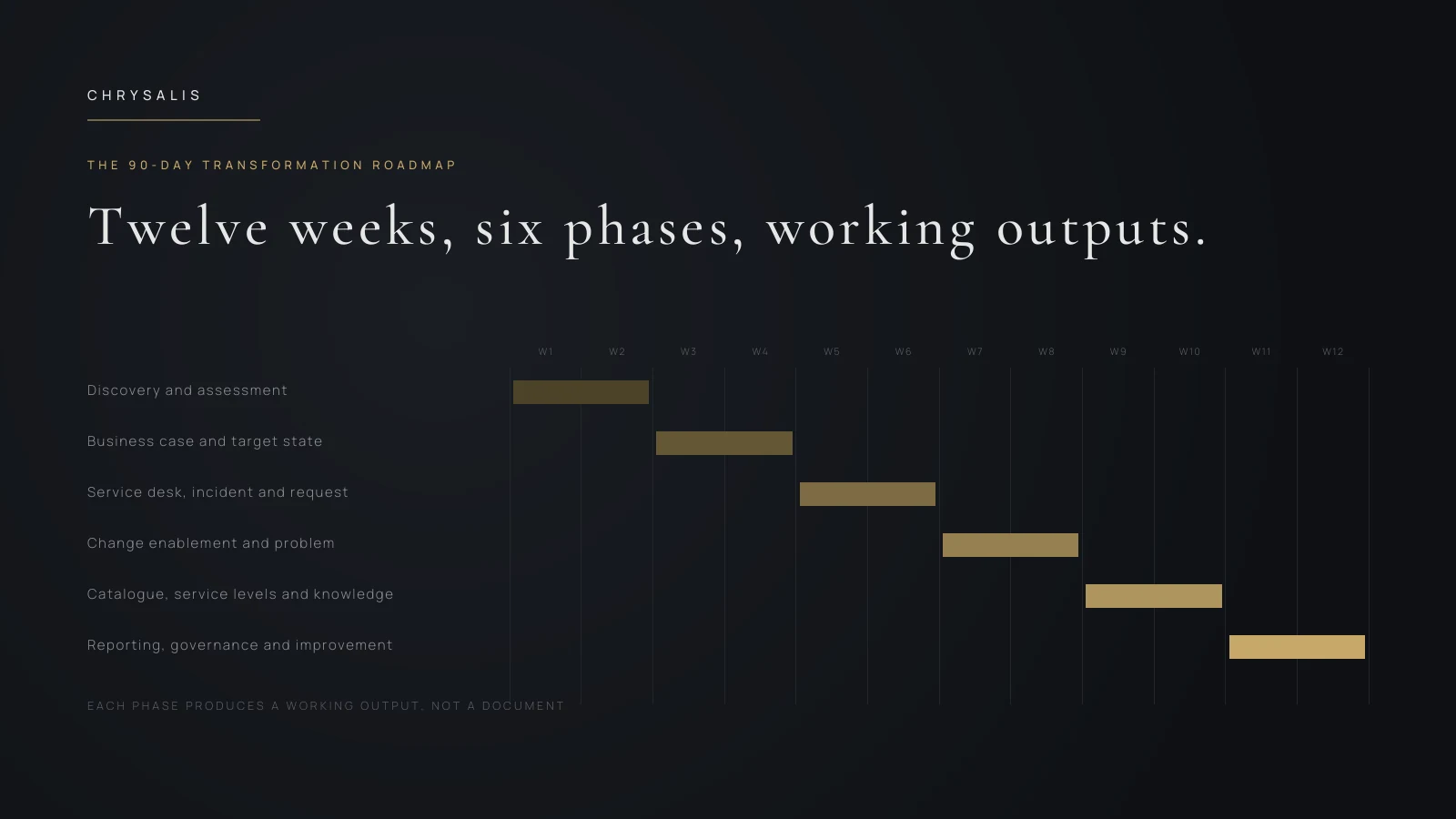
A selected set of priority IT service management practices — service desk, incident, request, problem, change, service levels, knowledge, assets and more — each with a process, decision points, escalation, measures and a first thirty days.
MEASURE
Measures that change decisions
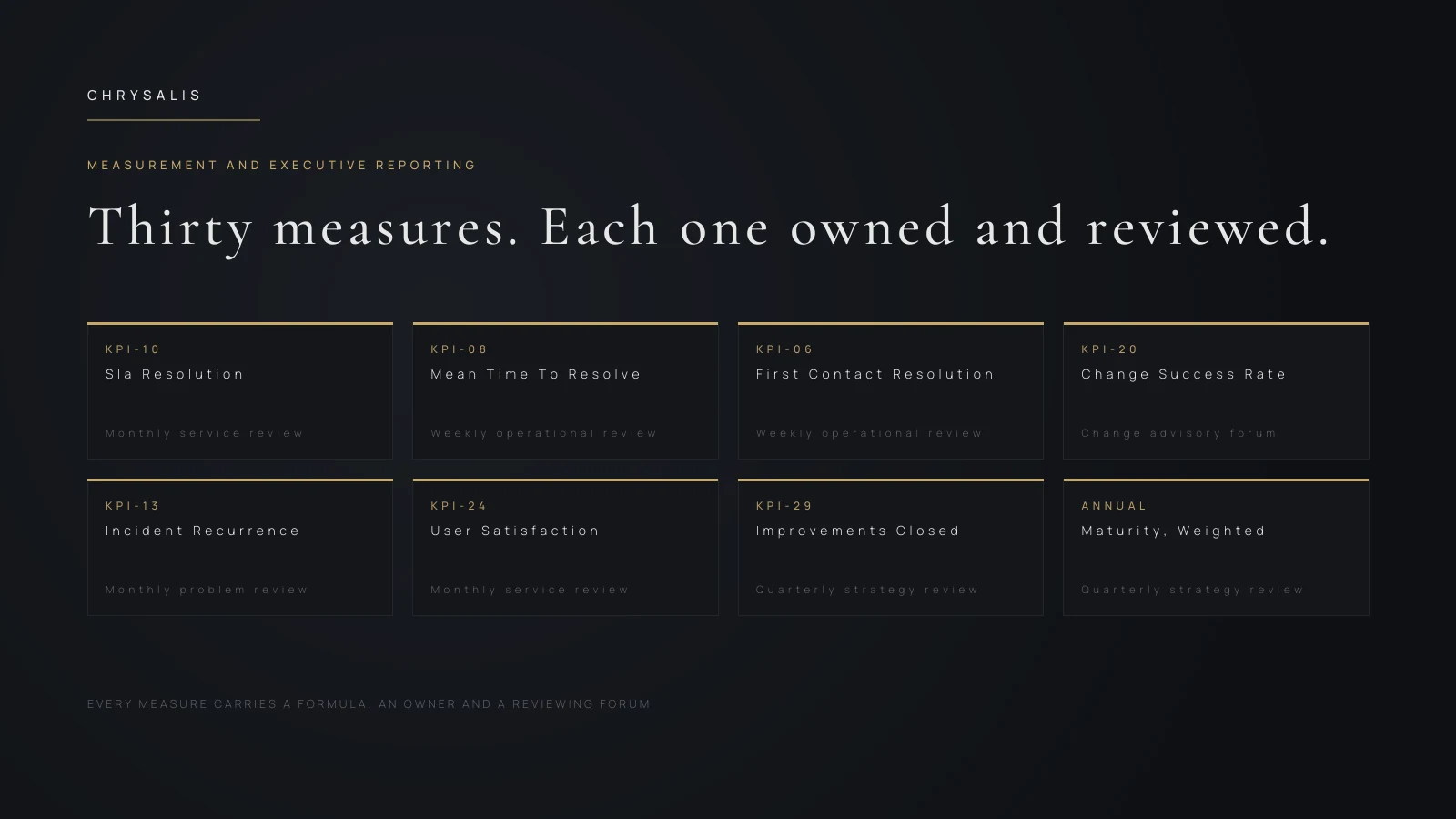
Thirty defined measures with formulas, sources, owners and reviewing forums, plus the weekly, monthly and executive reporting packs. With guidance throughout on avoiding the vanity metrics that make a bad month look acceptable.
IMPROVE
Improvement that survives
A continual improvement register with a prioritisation model, benefit tracking and an annual reassessment against the same twenty-two areas, so progress is comparable year on year rather than asserted.